
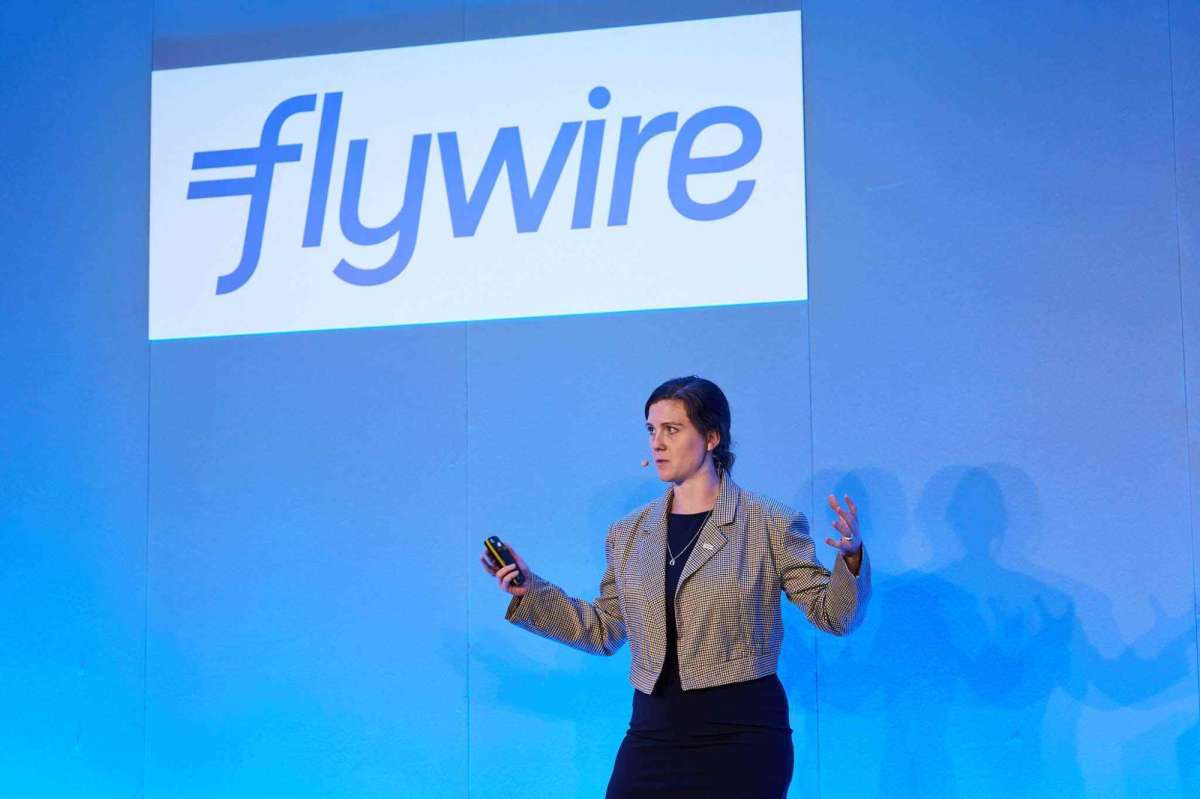
The U.K. higher education sector stands at a pivotal moment—one that presents not just challenges, but also a valuable opportunity for strategic transformation. With a determined sense of shared purpose and resilience, over 140 HE finance and international professionals gathered at the Carden Park Estate in Cheshire for Flywire’s Annual Conference & Awards Ceremony 2026 to chart this new future.
As Flywire’s SVP of Education, EMEA, Simon Read, asserted, this is the moment for the sector to “be brave and look to what could be.”

The clear message resonating throughout the event was a powerful one: securing the future requires moving beyond simple maintenance to build a robust foundation for growth. This means shedding the friction and risk caused by internal operational fragmentation to come together. As former covert operations leader and human intelligence specialist keynote speaker Mike Bates put it, HE leaders should “be the change you want,” and encourage their teams to “be a community, not a crowd.”
Securing the future requires the sector to move beyond maintenance and build a robust foundation for growth. Thankfully, the energy for this essential shift is already noticeable among Flywire’s clients. As Sharon Butler, Flywire’s co-president of Education, observed: “Our clients’ continued resilience is inspiring. It is clear that Flywire has the solutions to support the transformative change essential to the sector’s future success, but what’s even better is that our clients are embracing that opportunity with great enthusiasm.”
The conference unveiled three imperatives that will be critical to unlocking institutional resilience:
1. Stop chasing debt: Secure income at the point of enrolment
Given that the Office for Students (OfS) predicts 45% of institutions will face a financial deficit in 2025/26, and Flywire's 2024 Income Collection Survey found a third of institutions are carrying bad debt over 10%, the traditional, reactive approach to debt management is clearly unsustainable. It is a threat to survival. Instead, institutions should strive to adopt a proactive income collection model that safeguards revenue regardless of market conditions. Essential shifts include:
- Prioritising early intervention: A case study featuring Kingston University, London showed that securing payment upfront is key to this shift. By integrating payment/payment plan setup as a condition of enrolment Kingston increased payment plan success rates to over 90%. In addition, by simplifying payment pages and improving signposting, Kingston University, London, saw a 38% drop in students falling into reminder debt level 1 and a 51% reduction in academic suspensions. Critically, as a result of their actions, the University’s bad debt position fell to less than 1%.
- Unlock value with automation: Following the implementation of Flywire’s Student Financial Software (SFS), Kingston University reduced bad debt to less than 1%. Flywire's Collection Management offering automates collection processes to help collect 55–60% of aged debt from non-current students before engaging an external agency.
- Adopt AI as a strategic partner: Returning to the Flywire stage for a keynote, with a particularly illuminating session, performance strategist Brad Waldron urged the sector to embrace AI and work towards using it as a "participant in decisions." In a thought-provoking, practical example, Waldron demonstrated how AI could help institutions analyse debtor data, craft tailored payment plans and communications, and predict future risk, saving hours, if not days, of work and helping to develop strategy at the same time.
2. Align departments to remove roadblocks to revenue
Another prevailing theme was the fundamental importance of cross-functional collaboration to achieve meaningful change. The siloed operations of Admissions, Recruitment, and Finance and KPI misalignment is creating revenue-killing friction—whereby governance and finance KPIs stifle recruitment, and pressure to grow numbers, often by recruiting from “riskier” countries, can add to the debt burden and impact financial results. Added to which, the changes to Basic Compliance Assessment (BCA) metrics and increased scrutiny from UKVI, it is more important than ever that teams normalise regular contact, collaboration, and information sharing across every level of the institution.
As Sophie Turnbull, International Recruitment Director for the University of the West of England, emphatically stated, “collaboration is now essential, not optional,” and urged attendees to take just one action in the next 30 days: reach out to a counterpart in another department and ask a key question relating to removing friction between their teams.
3. Redefine compliance as a revenue enabler
A large part of the conference content touched on the administrative burden created by current and potential compliance requirements: such as becoming a regulated sector under Money Laundering regulations, BCA metrics and the Agent Quality Framework (AQF) and more. It is significant. As such, institutions must redefine compliance to be, as Flywire Lead Consultant David Neild, described, “the strategic scaffolding for revenue generation and protection.”
- Offload regulatory complexity: By partnering with a globally regulated company like Flywire, HEIs can offload some of the intense payment security and financial regulatory requirements including PCI DSS, AML and prevention of financial crime. In doing so, “[Flywire] takes on the complexity so you can focus on the business of education," commented Flywire CPO & co-President of Education, David King.
- Master sustainable recruitment: The recent changes to BCA metrics and mandatory compliance with the AQF for agent management means it is critical that the sector moves away from unrealistic high-volume recruitment targets and towards a more sustainable recruitment model. Critically, this shift would protect the sponsor license, the loss of which if removed due to non-compliance, would be catastrophic to any institution.
While providing validation for some that they are on the right path, the Annual Conference and Awards Ceremony 2026 confirmed that the way forward is clear: success hinges on bold process innovation, cross-functional collaboration, and strategic compliance. By embracing a holistic, tech-enabled, and collaborative approach, institutions can lead from the front to drive the meaningful change that will secure their financial and operational stability. As an Admissions Navigator participant said during a round-table: “We are working hard, but we need to work smarter.”